Video Performance – Nuna
Nuna is a video performance centered on a conversation with my grandfather. During our encounter, I asked him to write a few words on a blank sheet of paper, place the paper inside a bottle, and then break the bottle. This meeting was significant, as it was the first time we had seen each other in three years.
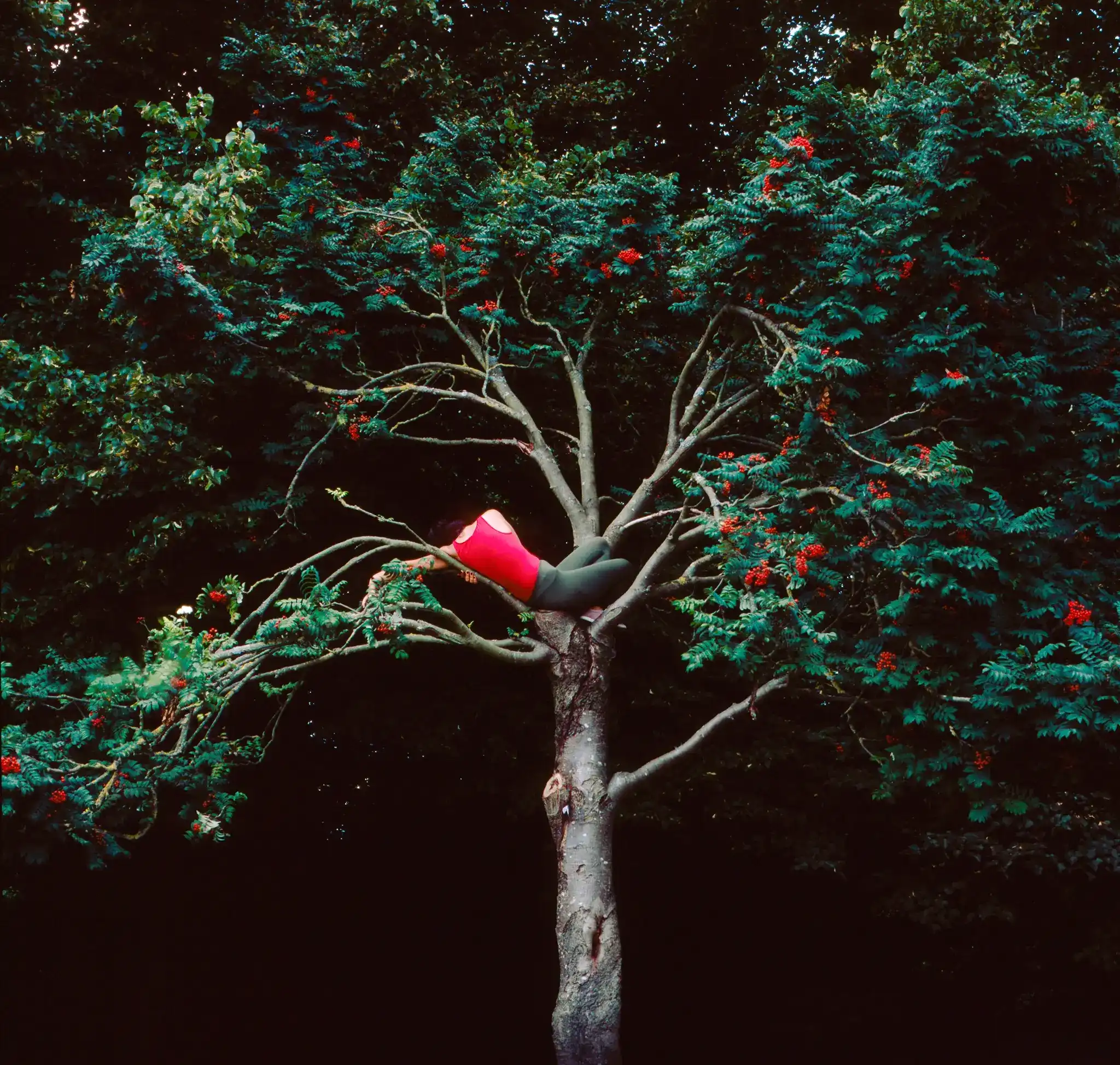
The footage also includes an action performed in Regent’s Park, where I repeatedly attempted to climb a rowan tree. In Norse mythology and folklore, the rowan is a tree of protection, and in certain traditions it is associated with femininity and women's origins. During a period in which my immigration status was being processed by the British government, I found myself in a state of limbo, suspended between places and uncertain of where I belonged or where I could inhabit.
In response to this condition of waiting, I turned toward nature. I regularly visited this tree near the place where I lived, returning to it as a site of refuge and grounding. After many attempts, I was finally able to climb it and merge with its branches, becoming part of it. Cradled within the canopy of the rowan, my body occupies a threshold between human and landscape, presence and disappearance. In this suspended state, the tree became a place of protection and temporary belonging during a period marked by uncertainty and waiting.
The act of becoming part of the tree became a way of inhabiting a space beyond bureaucratic definitions of identity and residence. Within its branches, I found a temporary habitat, a place from which to reflect on displacement, endurance, and the search for connection. The rowan became both witness and companion, offering a form of shelter that contrasted with the instability of my legal and social condition.
Together, the conversation with my grandfather and the encounter with the rowan tree explore memory, displacement, protection, ancestry, and the search for belonging across geographical, familial, and symbolic distances. The act of writing and breaking the bottle speaks to the fragility of communication and the transmission of memory, while the act of merging with the tree proposes another form of connection—one rooted in the body, in nature, and in the possibility of finding refuge during a period of uncertainty. Through these gestures, Nuna reflects on the ways we seek belonging when home, identity, and place remain unresolved.